
A lower price does not automatically mean flimsy card, faded colours or poor printing. In fact, an affordable business card with the right stock, artwork and design can look far more professional than an expensive card that has been badly designed. So, rather than asking whether cheap business cards are inferior, there is a much more useful question:
What actually makes a business card good quality — and which upgrades are worth paying for?
That is what we will look at here.
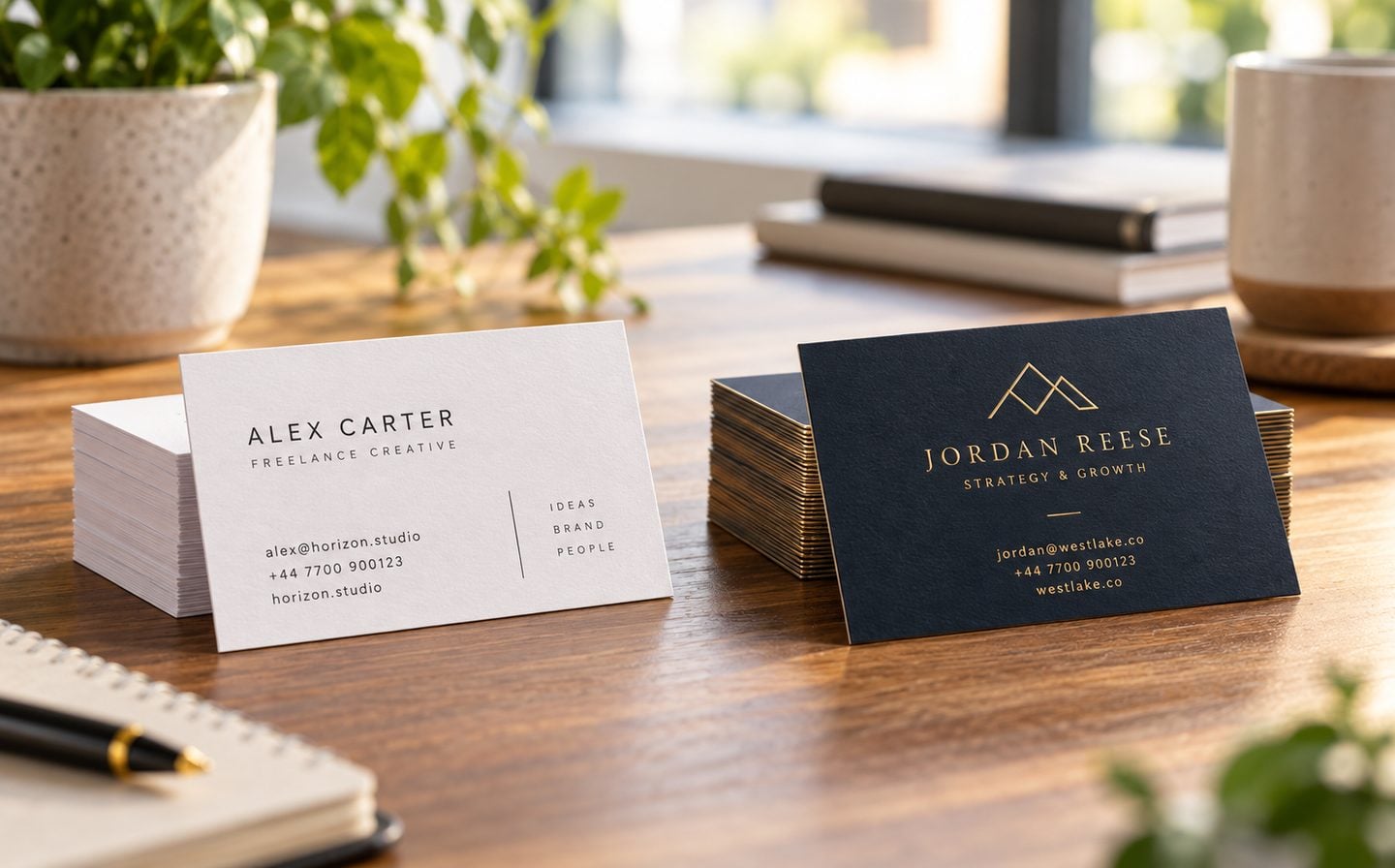
The price of a business card is influenced by far more than its quality. Printing quantity, production methods, card size, stock availability, finishing options and how efficiently a printer processes orders can all affect what you pay. This means a printer can offer competitively priced business cards without necessarily compromising on the finished result. The important thing is to look beyond the headline price and check what you are actually getting.
A good-value business card should still have:
suitable card stock;
clean, sharp printing;
correctly reproduced artwork;
accurate trimming;
readable text; and
a finish appropriate for its intended use.
If those fundamentals are right, there is no reason an inexpensive card cannot represent your business professionally.
Most customers will never know what you paid for your business cards. What they notice is how the card looks and feels when you hand it to them. Several things can make even an expensive card appear poor quality.
Card weight is usually measured in GSM, or grams per square metre. Generally, a higher GSM gives the card a heavier and more substantial feel, although GSM technically measures weight rather than exact thickness.
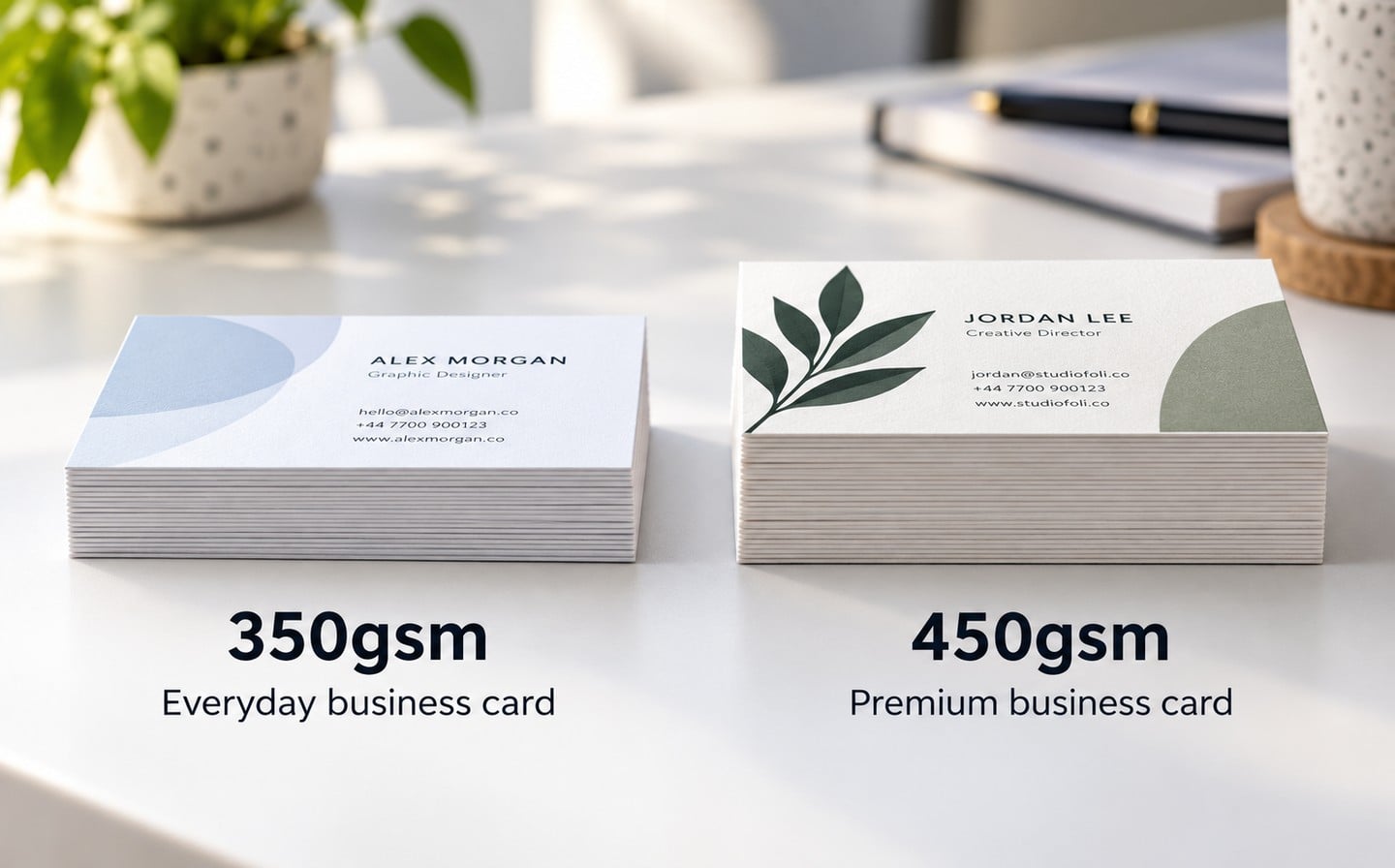
For everyday business use, 350gsm is a very practical choice. Cheap as Prints currently offers economy business cards on 350gsm stock, with heavier 450gsm options available for customers looking for a more premium specification. That does not mean 450gsm is automatically better. It simply creates a different impression.
A tradesperson handing out hundreds of cards may get better value from 350gsm stock. A luxury consultant, architect or wedding supplier who distributes relatively few cards might decide that a heavier card better suits their positioning. The best stock is the one that fits your business rather than the one with the biggest number printed next to it.
Card stock is only part of the equation. One of the easiest ways to make a business card look unprofessional is to cram too much information onto it.
Your business card does not need to explain everything your company does.
For most businesses, it only needs the essentials:
your name;
business name and logo;
telephone number;
email address;
website;
job title or short description; and
perhaps a QR code if it serves a useful purpose.
Good spacing matters. Leaving empty space around important information makes a design easier to read and often gives it a more premium appearance.
A clean business card on affordable stock can look considerably better than a costly card covered in competing fonts, colours, icons and messages.
Something that looks perfect on a laptop screen will not necessarily print perfectly. Screens and commercial printing reproduce colour differently, and low-resolution graphics that appear acceptable online can look blurred or pixelated once printed.
For a professional result, the artwork needs to be prepared for print. That includes using sufficiently high-resolution graphics, keeping important text away from trimmed edges and adding bleed where required.
The common UK business card size is 85mm × 55mm. Where 3mm bleed is required around all four sides, the supplied artwork should measure 91mm × 61mm.These are small technical details, but they often make a bigger difference to the finished result than paying extra for decorative finishes.
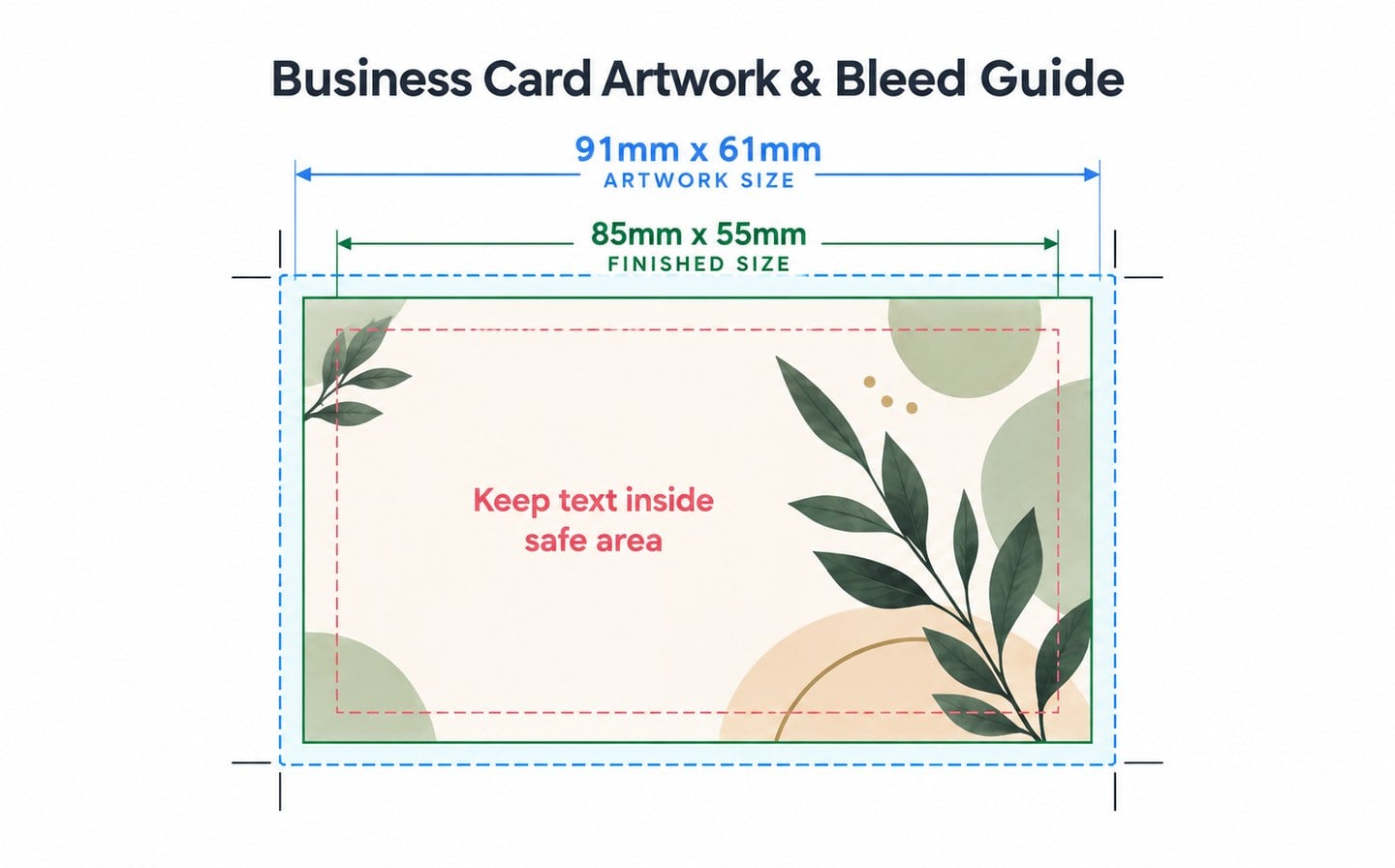
If you are trying to keep the cost of business card printing under control, there are several areas where you can save without making the finished product look cheap.
Unusual dimensions can certainly attract attention, but they are not necessary for most businesses. The familiar 85mm × 55mm format is practical, recognisable and easy to store in wallets and card holders. A non-standard shape or size is best reserved for situations where it genuinely adds something to your branding. Otherwise, standard dimensions usually offer excellent value.
You do not need foil, Spot UV or specialist textures to create a professional business card. Strong typography, good branding, sensible spacing and high-quality printing can produce an excellent result on their own. Premium finishes should enhance a good design rather than attempt to rescue a poor one.
Printing larger quantities can reduce the price per card, but that does not mean buying as many as possible is always economical. Think about how quickly you use your cards. If your telephone number, address, staff, branding or services are likely to change, ordering thousands could leave you with boxes of outdated cards. The best-value order is the quantity you will realistically use.
There are also situations where spending more on business cards makes sense.
Imagine paying for a luxury interior designer, high-end jeweller or specialist financial adviser and being handed an extremely flimsy business card. The card may contain all the right information, but the physical experience might not match the brand. For premium businesses, heavier materials and specialist finishes can reinforce the impression created by the wider brand.
The economics also change according to quantity. If you distribute thousands of cards, paying significantly more for every card may offer little benefit. If you only hand out a carefully selected number to high-value prospects, spending more on each card can be easier to justify.
Premium finishing works best when it supports the design.
Metallic foil can highlight a logo.
Spot UV can create contrast between matt and gloss areas.
A textured stock can reinforce the personality of an artisan or creative brand.
Soft-touch lamination can produce a more tactile finish.
The mistake is adding premium features simply because they sound expensive.
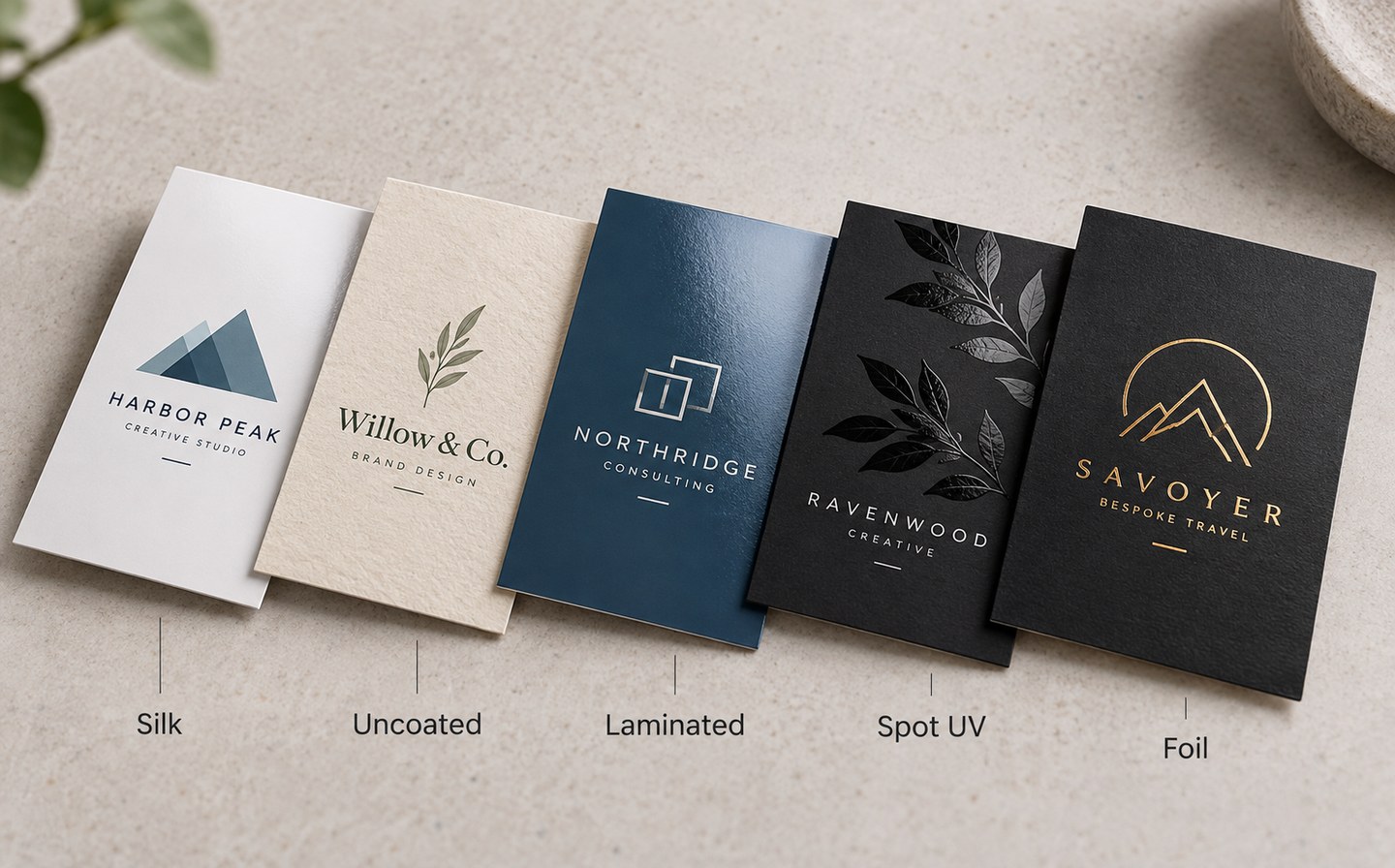
This is one of the most useful comparisons to make when buying business cards.
you want a professional everyday business card;
you regularly distribute large quantities;
value for money is important;
you do not require elaborate finishing; or
you need a straightforward card for networking, appointments or general promotion.
you want a noticeably heavier feel;
presentation is particularly important;
the card forms part of a premium brand experience;
you plan to use lamination or specialist finishing; or
you distribute relatively few cards.
At Cheap as Prints, there are options ranging from straightforward economy business cards through to heavier stocks and specialist finishes.
If your priority is affordable everyday networking, start with a simple card on suitable stock and invest your effort in strong artwork and clear information.
If presentation plays an important role in your brand, consider whether lamination, foil, Spot UV or a heavier material adds something meaningful.
The objective is not to buy the cheapest card or the most expensive card. It is to buy the right business card for the job.
We use cookies to enhance your experience. By continuing, you agree to our Privacy Policy.
Select which cookies you want to allow:
Save 5% on your order when you subsribe to our newsletter.
